Heat pump installation
Heat pump installation in Point Chevalier
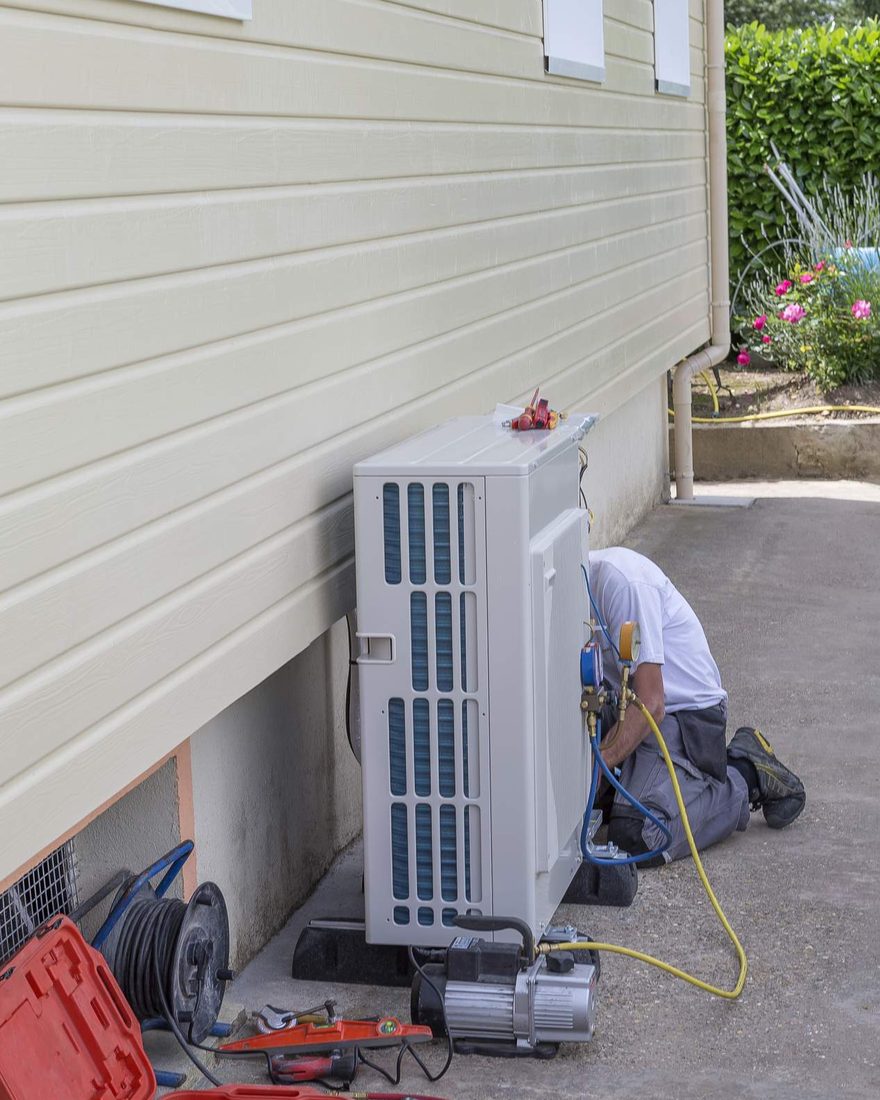
A heat pump is one of the cheapest ways to keep a Point Chev house warm and dry through winter. We install and wire them, with the indoor and outdoor units placed where they will work best on your house.
Why a heat pump suits an older house
Point Chevalier's bungalows and state houses were built decades before heat pumps came along, when a room was warmed by whatever heater sat in it. EECA's guide to choosing a heat pump calls it the lowest-cost way to heat a home, with the average unit in New Zealand putting out about three times as much heat as the electricity it uses, and it can cool the house in summer as well.
EECA also says a heat pump needs to be installed by a licensed electrician. That is our part of the job: the supply from the switchboard, on a dedicated circuit where the unit needs one, a lockable isolating switch on the wall beside the outdoor unit, and the testing and certificate at the end.
Which kind of heat pump?
Single-split
One outdoor unit and one indoor unit heating one room. Easy to install and cost effective, and the usual choice for the main living area of a bungalow.
Multi-split
One outdoor unit feeding several indoor units in different rooms, for larger homes that want heat in the bedrooms as well.
Ducted
Central heating for the whole house, blowing warm air through ducts to each room. It costs more up front, and in a single-storey house the ducts usually run through the ceiling space.
Where the units go
EECA's advice is to put the indoor unit high on an outside wall, away from corners, and the outdoor unit within about 15 metres of it, with clear space either side for airflow and room to get at it for servicing. On a single-storey Point Chev house that usually leaves a few sensible spots, and we look at them with you before anything is drilled.
The outdoor unit needs air, so it does not belong boxed in behind a new fence or squeezed into a narrow gap between houses. It also makes some noise, so think about where your bedrooms are, and where the neighbours' are. In a house where the switchboard is still on fuses or has no spare space, a switchboard upgrade often comes first.
Before you choose
A heat pump works hardest in a house that lets the heat straight out. EECA puts insulation first: start with the ceiling, then the underfloor where you can reach it. If you are replacing old downlights that leave holes in the ceiling insulation, our LED lighting page explains the insulation-rated fittings that fix that.
Once it is running, EECA suggests a setting between 18 and 21 degrees, warm enough to fight damp and mould without wasting power, and a clean of the filter about once a month through winter. Lower-income homeowners may be eligible for a Warmer Kiwi Homes grant towards insulation and an efficient heater, and EECA's website has the eligibility tool.
Heat pump questions
Does a heat pump need its own circuit?
Not always. EECA's installation guide says a heat pump can be connected to an existing circuit with enough spare capacity or to a dedicated circuit wired back to the switchboard, depending on its power rating and the wiring in the house. Either way it gets a lockable isolating switch on the wall beside the outdoor unit, so it can be serviced safely.
Should I leave the heat pump on all the time?
EECA says no: running a heat pump around the clock uses more energy overall. Use the timer to warm the room before you get home or get up.
Can a heat pump cool the house in summer too?
Yes. A heat pump heats and cools, and EECA suggests trying the dehumidifying or fan setting before full cooling, because both use less energy.
Is a heat pump worth it for a small bedroom?
Not always. EECA says a heat pump is usually the best option for larger rooms, while a plug-in electric heater with a thermostat suits a small room or an office. A multi-split lets you start with the living area and add bedrooms later.
Will I get a certificate?
Yes. The new circuit is fixed wiring, so it is tested and comes with a Certificate of Compliance.
Ready for a warmer winter?
Call 021 156 4005 to talk through a heat pump for your house, or send the details below.
Other services in Point Chev
House rewiring
Partial and full rewires for interwar bungalows, 1930s state houses and the newer homes at the end of the peninsula.Switchboard upgrades
Old fuse boards replaced with modern boards, circuit breakers and RCD protection, with the inspection mains work needs.Fault finding and repairs
Tripping circuits, flickering lights, dead sockets and warm plugs traced to their cause and put right.Emergency call-outs
Electricians available for call-outs 24 hours a day, 7 days a week when something electrical fails.LED and outdoor lighting
LED downlights, kitchen and living room lighting, and garden and outdoor lights for the section.Shops and commercial
Electrical work for the shops and businesses along Point Chevalier Road and Great North Road.Enquiries
Contact us
Call 021 156 4005 at any hour, or tell us about the job below and we will get back to you.
021 156 4005- Auckland
- Call-outs around the clock, every day of the week